

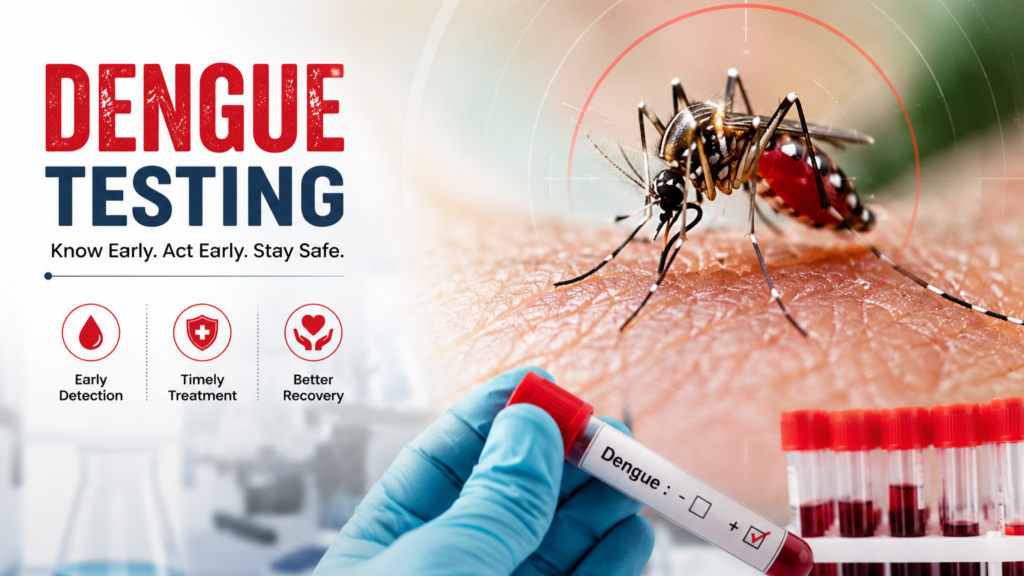
A fever that suddenly comes with body pain can make anyone a little worried, especially during dengue season. Sometimes it is just another viral infection, but sometimes dengue may be the reason. If your doctor suspects dengue, a Dengue Test can help confirm what may be causing the illness.
One common question, though, is: When should I get tested? The answer depends partly on how long you have had the fever.
Don’t wait too long if dengue is suspected
Dengue does not always look different from other viral infections at the beginning. Fever, headache, tiredness and body aches can happen with several illnesses.
If you have been running a fever for a few days and also have symptoms such as pain behind the eyes, muscle or joint pain, nausea, vomiting or a skin rash, speak to a doctor. They may suggest testing based on your symptoms and how many days you have been unwell.
The day of illness matters
This is where dengue testing can be a little different from an ordinary blood test.
In the early part of the illness, an NS1 antigen test may help detect dengue infection. Later, the body starts producing antibodies, and tests for antibodies such as IgM may become more useful.
So, a test that is useful on one day of the illness may not be the best choice several days later. This is why you should tell the doctor or laboratory exactly when your fever started.
What symptoms should you look out for?
Fever is the main symptom, but it is not the only one. Dengue can also cause:
- Headache
- Pain behind the eyes
- Muscle and joint pain
- Nausea or vomiting
- Weakness or unusual tiredness
- Skin rash
- Reduced appetite
Having these symptoms does not automatically mean that you have dengue. Other infections can cause similar problems, which is why medical evaluation is important.
What if the test is negative?
A negative result can be reassuring, but the timing of the test matters.
If the test was done very early and you continue to have fever or other symptoms, your doctor may ask for another test or recommend additional blood investigations. Your platelet count and other blood parameters may also be monitored when dengue is suspected.
In other words, don’t judge your condition from one number on one report.
When should you get medical help quickly?
Most people recover from dengue without serious complications, but some can become quite ill.
Get medical attention quickly if you develop severe stomach pain, repeated vomiting, bleeding, breathing difficulty, unusual sleepiness or restlessness, or if you suddenly feel much worse.
A drop in fever does not always mean that the illness is completely over, so continue following your doctor’s advice even when the temperature comes down.
A final word
If you have a persistent fever and dengue is a possibility, don’t simply assume it is a normal seasonal fever. Talk to a doctor and find out whether testing is needed.
A Dengue Test can provide useful information, but the result makes sense only when it is considered along with your symptoms and the number of days since the fever began.
If you are advised to get tested, follow the instructions given by your doctor or diagnostic laboratory. And if your symptoms are getting worse, don’t wait for a report before seeking medical care.